
Rachel Was Here
Rachel Balfour, Regina, SK, October 2000 - February 2019

As regular readers of this newsletter know, I turned the stories of eleven young people who died of drug poisoning in Ontario into short animated films. But there was a second phase of the We Were Here project, which allowed me to collect six more stories from across Canada. I’m going to share them here, one at a time over the coming months.
The story of Rachel’s birth has always been a family favourite. At a regularly scheduled appointment, Heather’s doctor advised her to nab her husband and dash to the hospital, as her baby was arriving imminently. Heather had not felt so much as a twinge. They rushed to the local hospital, where Heather was told to sit tight because they had to make way for an emergency patient coming in. So she sat waiting until her doctor burst through the door and said, “What are you doing here? Let’s go!” Heather was the emergency patient. Rachel arrived thirty minutes later. Heather’s boss joked that she didn’t need to take mat leave, just her regular lunch hour.
Rachel’s older sister Taylor had arrived two years earlier after a more traditional twelve-hour labour. The two girls were complete opposites but adored each other. Taylor was very vocal and extroverted, Rachel was quiet and reserved. She idolized her sister. They did all the classics together as little kids: skating, swimming, Brownies. As teens, their interests diverged. Taylor (below right) was all about language, while Rachel (below left) was keen on facts and figures.
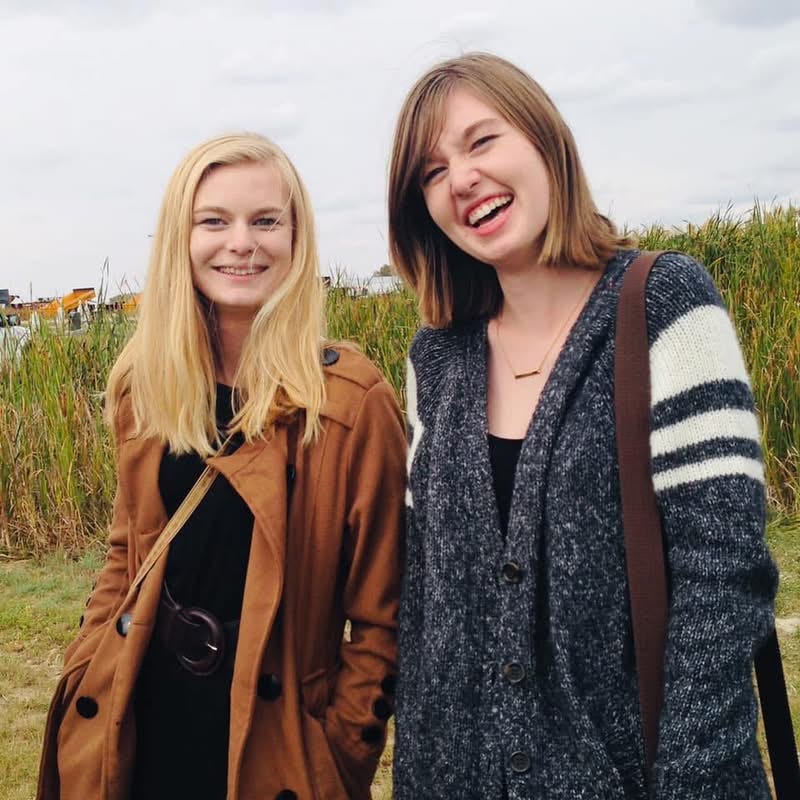
Rachel also had a creative side, with a talent for music. She practiced where nobody could hear her, becoming proficient in trumpet, oboe and guitar. Although she didn’t enjoy attention, she lit up while performing in school concerts. She put herself out on a limb by trying improv, but ultimately preferred being backstage doing tech and lights.
Rachel excelled in school, but hated it all the way through. She was exceptionally shy. She was also very private. Despite its overwhelming popularity among teens, social media was anathema to her. She didn’t like having her picture taken, much less posting it online.
In high school, Rachel experienced depression and anxiety and sought treatment, though she didn’t tolerate the medication prescribed to her. She also tried therapy, but due to the counsellor’s workload, Rachel was only able to see her every 4-6 weeks, which proved too sporadic to be helpful.
She pushed on, fulfilling all her high school requirements six months early. Then she spent an extra term taking additional courses to improve her odds of getting into a top university for computer sciences. She chose the University of Alberta in Edmonton and went off to her first year, living in residence. Without offering a lot of detail, she reported to her parents that she was enjoying university life.
Rachel had a very specific and clear plan for herself. She loved drawing as well as all things STEM, so she was going to start her own business developing animation software and employ other talented computer geeks. Her sister pursued an English degree, and the two would joke that Rachel would have to bankroll Taylor’s literature habit.
Despite her intense shyness, Rachel was always willing to speak up for others and would approach strangers on the street to offer help. Taylor says she learned compassion from her sister and makes a point of living by her example.
Rachel came home for the Christmas break in December 2018, and the family did all the usual holiday things. There was nothing about Rachel’s behaviour or mood to cause concern, though she was a bit preoccupied by a make-up exam she had to write when she returned to campus. When her family saw her off at the airport after New Year’s, they had no idea it would be for the last time.
Heather had a long phone conversation with her daughter on a Friday in early February. They talked about what they’d do during a visit over Reading Week. They had a lengthy debate about whether Rachel should see about having her teeth straightened by an orthodontist in Edmonton or back in Regina. It was a conversation extraordinary in its ordinariness. Then Heather’s messages went unanswered over the weekend and into Monday. By Tuesday, she was frantic and called the dorm, asking someone to check on Rachel. Hours passed. Then four Regina police officers came to the door to report that Rachel had been found dead in her room.
Everything was a blur for a long time after the initial shock. Months later, the coroner’s report showed that Rachel had a lethal amount of fentanyl in her system and some evidence of previous drug consumption, but there was insufficient information to draw any conclusions about a history of substance use. Rachel left no clues. Her parents can only guess that she was self-medicating to ease her stress, and have had to accept that they’ll never really know what happened to their brilliant, ambitious daughter.
Since Rachel’s death, her family has honoured her in various ways, usually around her birthday in October. One year, they held a fundraiser in partnership with a local restaurant, raising over $3,000 for Canada Learning Code, to help support other computer scientists with their training. Taylor has published a book of poetry dedicated to her sister. Heather has had the courage to speak to the media and accompanied her MP to the House of Commons to address the opioid crisis last year. You can watch her interview on CBC News prior to the most recent federal election. What stands out for me is Heather’s point that we all lose when these young people aren’t here to contribute their unique talents to the world.
Thank you Mary for this wonderful tribute to Rachel 💕
Thanks, Angela